Network security

Protek.
CrowdSec → MikroTik bouncer with a NOC dashboard.
- Status
- Active
- Live
IP addresses blocked now Live figure unavailable right now
- Stack
- Licence
- MIT
- Last update
- Nov 2026
- Source
- Source on GitHub
Pulls attacker decisions from CrowdSec and pushes them to the router, so bans happen at the network edge — with a NOC dashboard over all of it.
Why I built it
CrowdSec on a single server only protects that server. Protek moves the ban to the network edge: when an attacker trips a CrowdSec scenario anywhere, it lands on the MikroTik router’s firewall and is dropped before it reaches anything behind it.
How it works
- CrowdSec flags an IP — a scenario fires on any server running CrowdSec.
- Protek updates the router — the decision is reconciled into an address list on the router’s firewall.
- The edge drops the traffic — before it reaches anything behind the router.
What it does
- Fans out to more than one firewall — MikroTik, pfSense, OPNsense, iptables/ipset and Cloudflare.
- Federation — pull decisions from several CrowdSec instances, merge them, and score how strongly the sources agree.
- Threat intel on every attacker — ASN, GeoIP, WHOIS, rDNS, CrowdSec CTI, Tor-exit and VPN detection.
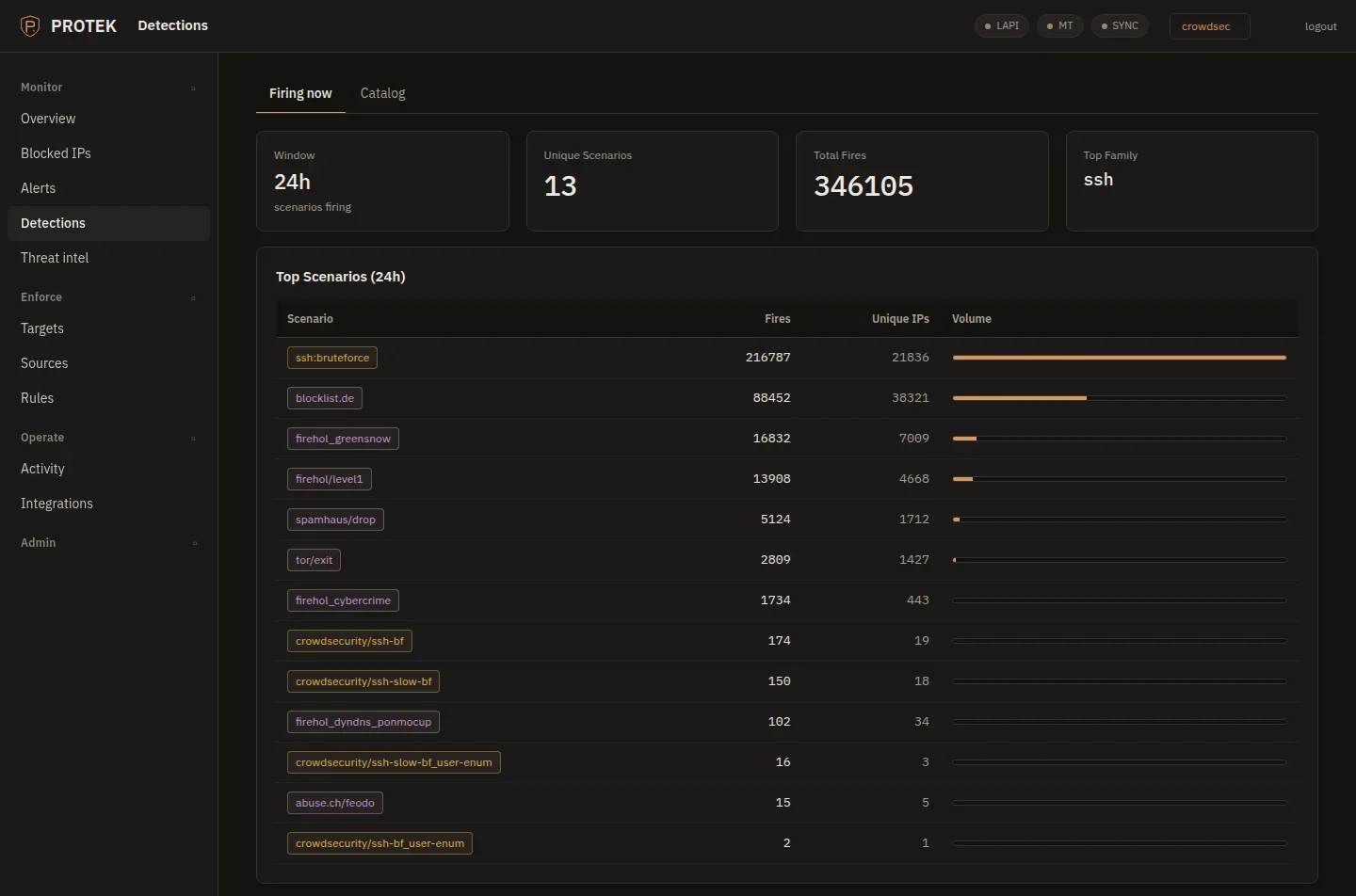
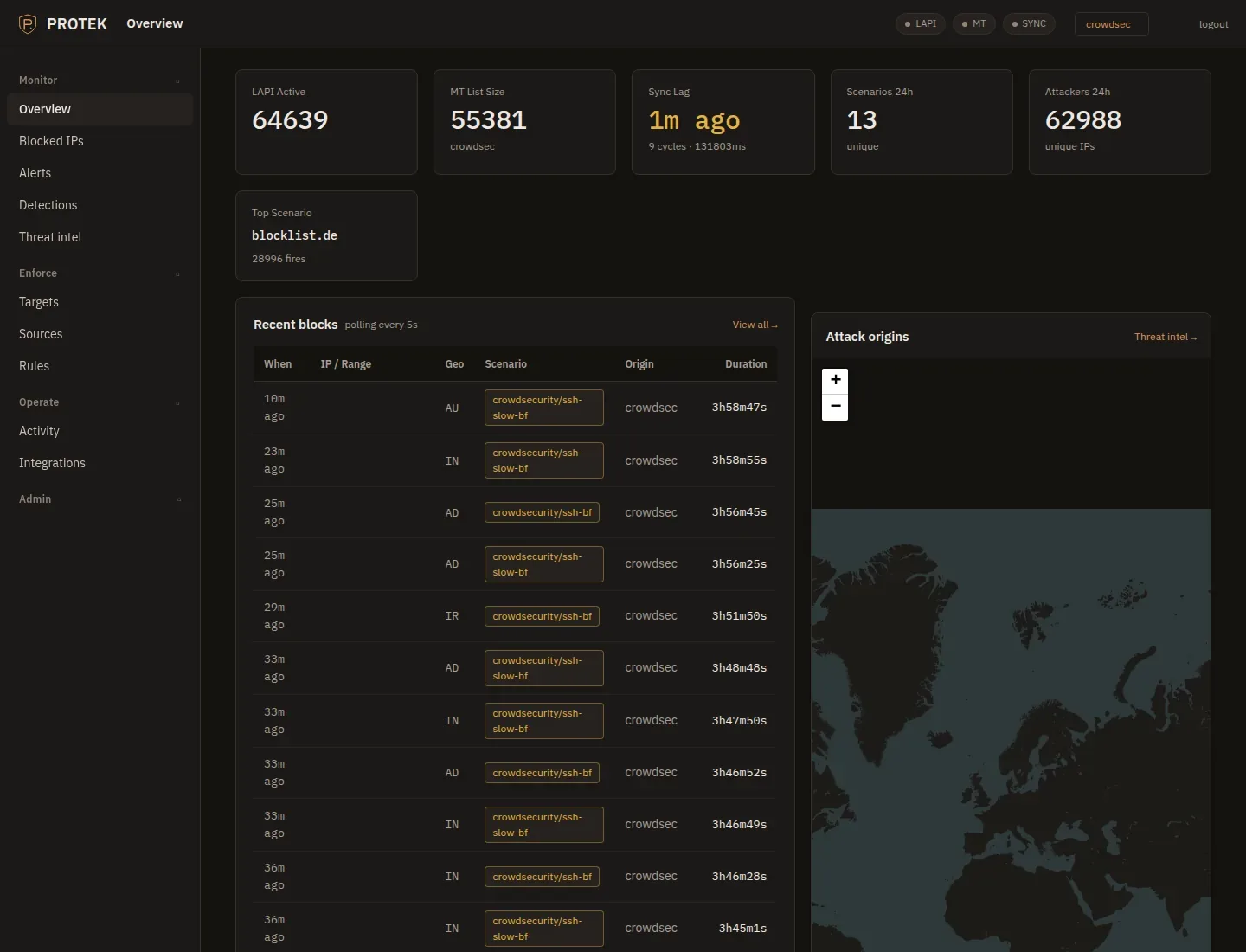
- A NOC dashboard — live block feed, attack-origin map, scenarios, sync status, audit log, and two-factor login.
Engineering decisions
- A pure, tested diff engine — each cycle it decides what to add to and remove from the router’s address list, pushes the change in batches, and only ever touches entries it created.
- Dry-run by default and self-healing — nothing is pushed until you say so, and drift on the router is corrected on the next cycle.
More screenshots